Can a non-US citizen own a US LLC? Yes — and you don't need a green card, a visa, a US address, or a Social Security Number to do it. There is no citizenship or residency requirement for LLC ownership anywhere in the United States. The real question isn't whether you're allowed — it's what you take on once you do, because a US company brings US filing obligations that apply whether or not you ever set foot in the country.
Can a non-US citizen own a US LLC? The short answer
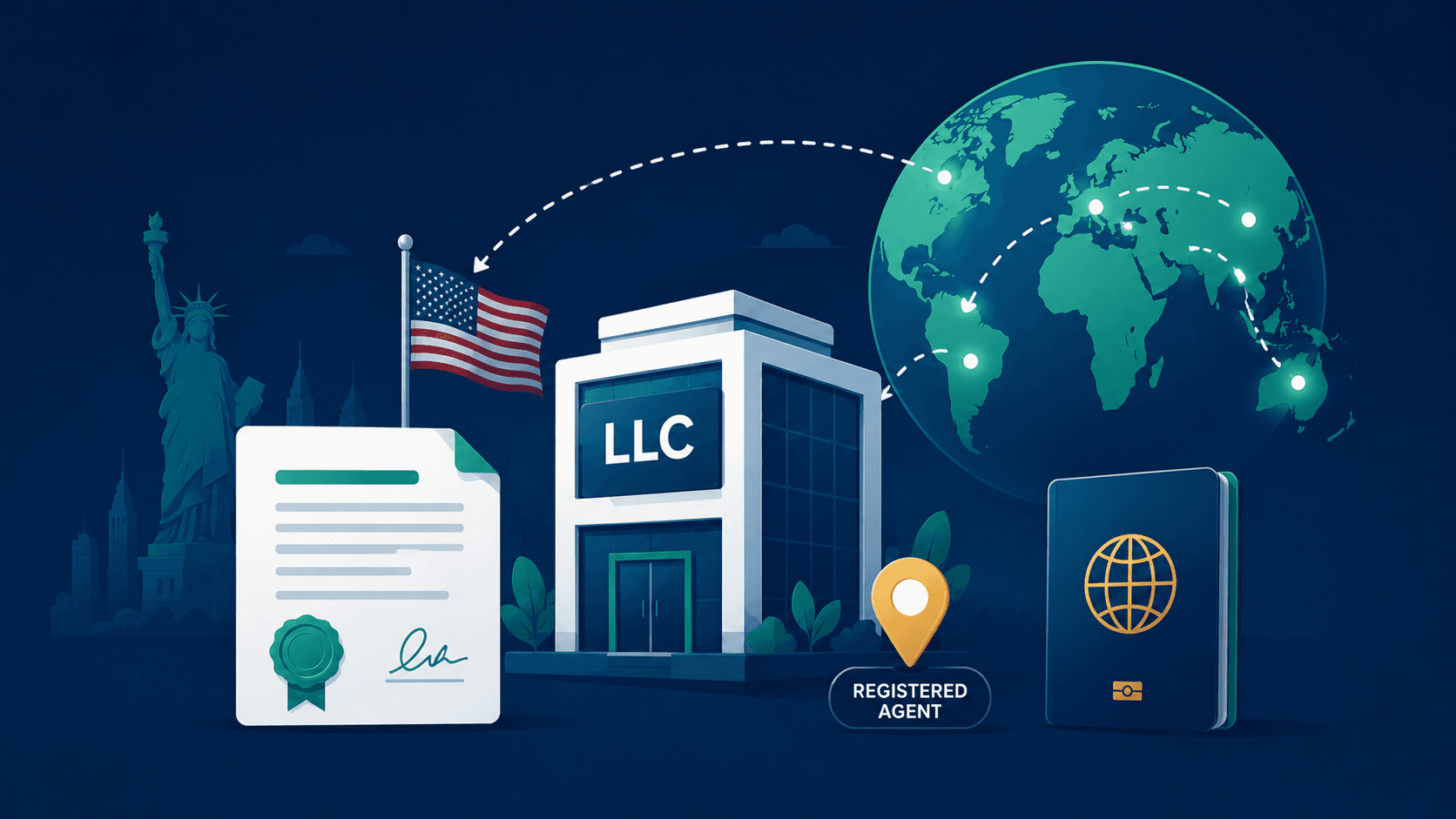
Foreign ownership of a US LLC is entirely legal. You can be the sole owner, you can own it alongside other foreign nationals, and you can do all of it remotely from Karachi, Dubai, Mumbai, Lagos or London.
A few genuine limits are worth knowing up front:
A handful of regulated industries — banking, insurance, defense contracting, some transport — carry federal or state restrictions on foreign ownership. Ordinary trading, e-commerce, consulting, software and agency businesses do not.
You cannot elect S corporation status. An S corp requires all shareholders to be US citizens or resident aliens. This catches people out, because S corps are widely discussed as a tax-saving structure in US content aimed at Americans. As a non-resident, that route is closed to you. Your realistic choices are an LLC (usually taxed as a disregarded entity or partnership) or a C corporation.
Individual states set their own rules for formation and annual compliance, but none of them bar foreign owners.
So the legal answer is straightforward. Everything interesting is in what follows.
What you actually need to form one
Four things, none of which require you to be in the US:
A state of formation. Wyoming, Delaware, New Mexico and Florida are the ones most non-residents choose. Wyoming and New Mexico are popular for low cost and light annual reporting. Delaware is the default if you expect to raise venture funding, because investors know its corporate law. There is no universally "best" state — the right answer depends on whether you're bootstrapping an e-commerce business or planning a funding round.
A registered agent. Every LLC must have an agent with a physical street address in the state of formation who can receive legal documents. Since you're not resident there, you hire a commercial registered agent service. This is routine and inexpensive.
Articles of organization. Filed with the state. This is the actual formation step.
An EIN. Your Employer Identification Number is the company's federal tax ID. Non-residents obtain one by filing Form SS-4 — and critically, you do not need an SSN or an ITIN to get an EIN for your company. Because the online application requires a US tax ID, foreign applicants apply by fax or mail instead, which takes longer but works.
Notice what isn't on that list: a US address for you personally, a US bank account, a visa, or any US tax number in your own name.
The thing nobody warns you about: banking
Forming the company is the easy part. Opening a US business bank account as a non-resident is where most founders hit friction.
Traditional US banks generally want an in-person visit and often expect a US personal tax number. Fintech platforms aimed at remote founders have made this dramatically easier, but they run their own compliance checks and have become noticeably stricter — expect to show a real operating business rather than an empty shell. A live website, client contracts, or transaction history all help.
Plan for banking as a distinct project with its own timeline, not an afterthought that happens automatically once the LLC exists.
What you owe once the company exists
This is the part that turns a simple yes into something that needs managing.
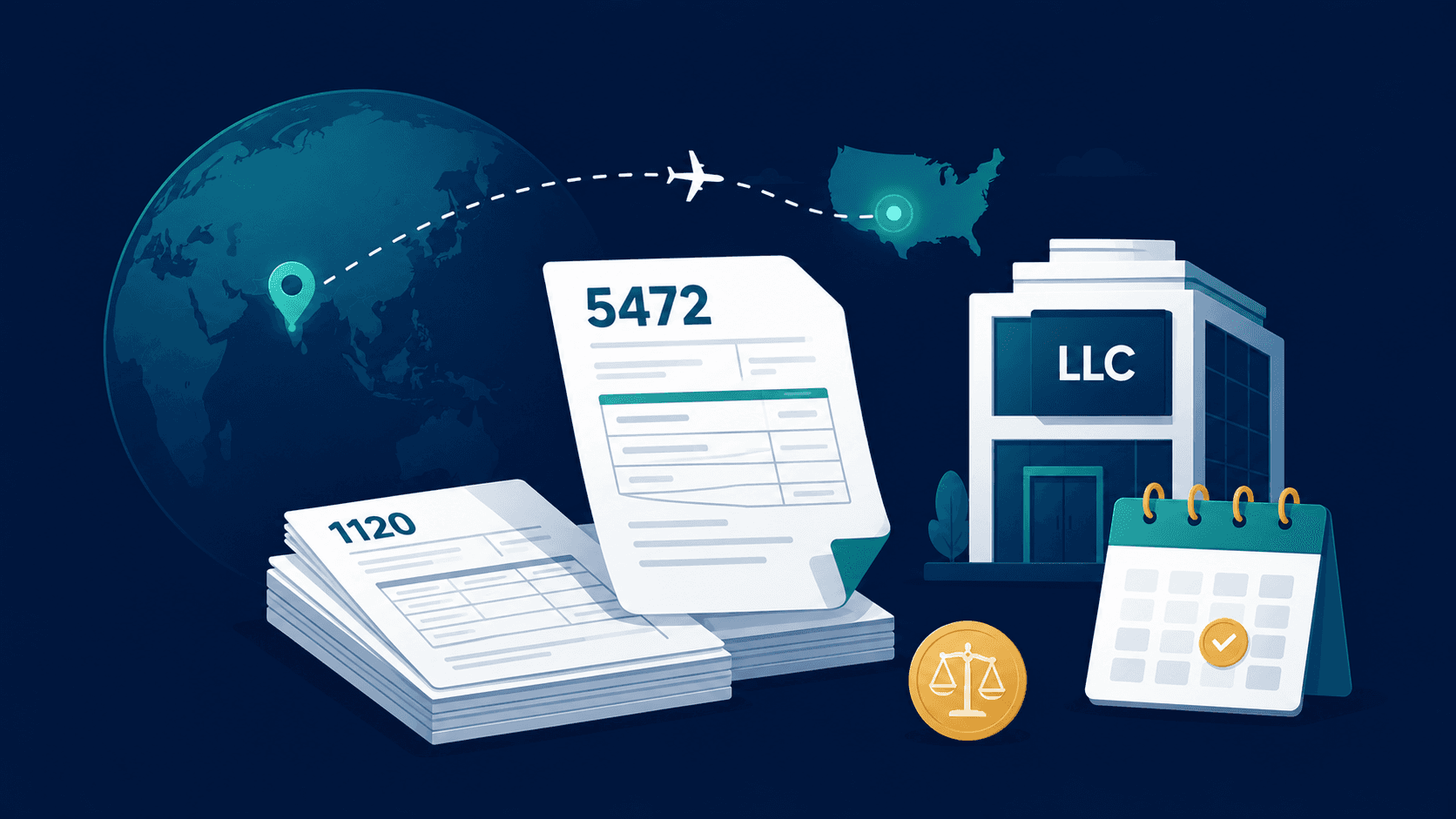
Federal information reporting. A US LLC owned by a single non-resident is generally treated as a foreign-owned disregarded entity, and it must file Form 5472 attached to a pro forma Form 1120 every year — even with zero income and zero activity. Funding your own company counts as a reportable transaction, so the obligation typically exists from year one. The penalty starts at $25,000 per form per year. Our guide to US LLC tax filing for non-residents covers the mechanics in full, and it's the single most expensive thing foreign owners miss.
State obligations. Annual reports and franchise taxes in your state of formation, on their own deadlines, entirely separate from anything federal.
Personal US filing, sometimes. If your LLC generates income effectively connected with a US trade or business, you may need to file Form 1040-NR personally. That's when a personal tax number enters the picture.
Sales tax, possibly. Selling physical goods into US states can create sales tax obligations depending on where and how much you sell.
Do you need an ITIN as well?
Not to form the company, and not necessarily at all.
Your EIN identifies the business. An ITIN identifies you as an individual, and you need one only when you personally have a US filing obligation — most commonly filing a 1040-NR — or when a payer or institution specifically requires a US tax number in your name.
Plenty of non-resident LLC owners operate for a year or more with only an EIN. Others need an ITIN quickly. The mistake is discovering you need one in March with an April deadline, because processing takes weeks and considerably longer in tax season. As an IRS Certifying Acceptance Agent, Accountaxpert verifies your identity documents in-house — your original passport never leaves your hands. Our complete ITIN guide for non-residents explains exactly when the requirement is triggered.
LLC or C corporation?
Most non-resident founders want an LLC. It's simpler, cheaper to maintain, and avoids the double taxation that comes with a C corp paying corporate tax and then taxing distributions.
A C corporation makes sense in narrower cases — chiefly if you're raising venture capital, since investors typically expect a Delaware C corp, or if you want to retain profits inside the company rather than pass them through.
What you should be wary of is content written for a US audience recommending an S corp election. As covered above, that option isn't available to non-residents, and applying US-domestic tax advice to a cross-border situation is a common and costly error.
A realistic timeline
For a straightforward single-member LLC:
Formation: a few days to a couple of weeks, depending on state and filing speed
EIN by fax or mail: typically three to four weeks for foreign applicants without an SSN
Banking: highly variable — days on a fintech platform, considerably longer through traditional routes
First federal filing: due 15 April following the end of your first tax year
The compressed version: you can have a legally formed company quickly, but being genuinely operational — funded, banked and compliant — is better measured in weeks than days. If you're setting up now, our US company setup service handles formation and the EIN together so the sequence doesn't stall.
Frequently asked questions
Can a non-US citizen own a US LLC without living in the US?
Yes. There is no residency requirement for LLC ownership. You can form and own a US LLC while living anywhere in the world, and you never need to enter the United States to do it. You will need a registered agent with a physical address in your state of formation, and you'll need to meet US federal and state filing obligations each year, but physical presence is not among the requirements. Founders across Asia, the Middle East, Africa and Europe run US LLCs entirely remotely.
Do I need an SSN to open a US LLC?
No. You do not need a Social Security Number to form an LLC or to obtain an EIN for it. Because the IRS online EIN application requires a US tax ID, foreign applicants without an SSN apply using Form SS-4 by fax or mail instead. It takes longer than the online route but is the standard path for non-residents and works reliably. You also don't need an ITIN to form the company — that's a separate question tied to your personal filing obligations.
Can a non-resident elect S corporation status for their LLC?
No. S corporation status requires every shareholder to be a US citizen or resident alien, so non-resident aliens are not eligible. This matters because a lot of US-focused tax content recommends the S corp election as a way to reduce self-employment tax, and that advice simply doesn't transfer to non-resident owners. Your practical options are an LLC taxed as a disregarded entity or partnership, or a C corporation.
Which state is best for a non-resident LLC?
There's no single right answer. Wyoming and New Mexico are common choices for low formation costs and light annual reporting. Delaware is the standard if you expect to raise venture funding, because investors are familiar with its corporate law. Florida and Texas can suit businesses with genuine operations there. Registering in a state you have no connection to is normal for non-residents, but if you have real physical presence somewhere — inventory, staff, an office — that state may have its own registration requirements.
Does owning a US LLC help with a US visa or green card?
No. Company ownership carries no immigration benefit on its own. Forming an LLC does not grant you the right to work in the US, does not provide a visa route, and does not affect your immigration status. Business immigration is a separate legal area with its own requirements, and anyone suggesting an LLC is a path to US residency is overselling it. Speak to an immigration attorney for that question.
Get your US company set up properly
The legal answer is yes — but the value is entirely in what happens next. Accountaxpert handles formation, your EIN, the annual Form 5472 and state filings, and the bookkeeping underneath it, for founders across 12+ countries running US companies from home.
This guide reflects US federal and state rules as of 2026 and is general information, not advice for your specific situation. Requirements, fees and deadlines change — verify current rules at IRS.gov and with your state, or speak to our team before acting.